
The cross-border e-commerce market in Southeast Asia hit $17 billion in 2023 and shows no signs of slowing. For supply chain managers and logistics professionals, this growth creates both opportunity and pressure. Your systems need to handle multiple currencies, navigate varying customs regulations, and coordinate deliveries across six countries with vastly different infrastructure. The question isn’t whether to adapt, but how fast you can move.
Cross-border e-commerce in Southeast Asia demands supply chain software that handles multi-country compliance, real-time inventory visibility, and integrated logistics. Success requires understanding regional payment preferences, customs automation, and warehouse network strategies. Companies that modernise their systems now gain competitive advantage as the market accelerates towards $220 billion by 2032.
Understanding the regional market dynamics
Southeast Asia isn’t a single market. It’s six major economies with different languages, payment methods, and logistics infrastructure.
Indonesia processes most transactions through digital wallets. Singapore prefers credit cards and bank transfers. Thailand sits somewhere in between. Your supply chain software needs to accommodate these preferences without creating operational silos.
The numbers tell a compelling story. The region’s digital economy grew from $100 billion in 2019 to over $300 billion in 2024. Cross-border transactions account for roughly 20% of total e-commerce volume, and that percentage keeps climbing.
Consumer behaviour varies dramatically by country. Vietnamese shoppers love electronics and fashion from China. Malaysian buyers source health products from Singapore. Philippine consumers order everything from toys to furniture from regional sellers.
Why traditional supply chain systems struggle
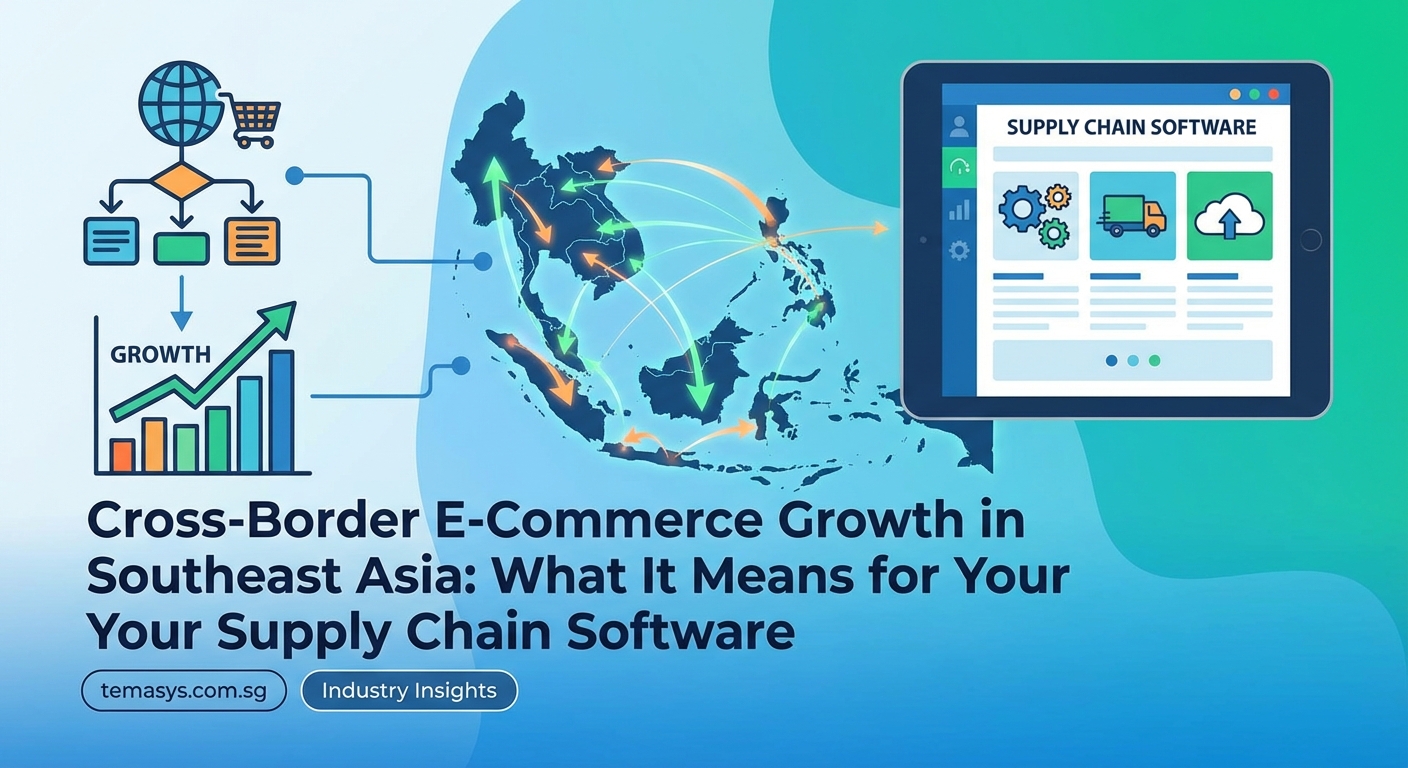
Most legacy systems were built for domestic operations. They assume one currency, one tax regime, and one set of shipping rules.
Cross-border operations break those assumptions immediately.
Consider a typical scenario. A Singapore-based seller receives orders from customers in Jakarta, Manila, and Bangkok on the same day. Each order triggers different requirements:
- Indonesia requires specific import documentation and local tax registration
- Philippines has strict customs valuation rules and prohibited item lists
- Thailand demands Thai-language invoices for certain product categories
Your system either handles this complexity automatically or your team does it manually. Manual processing doesn’t scale when order volumes double every 18 months.
The biggest mistake we see is companies treating Southeast Asia as a single market with uniform requirements. Each country has unique compliance needs, and your software must reflect that reality or you’ll drown in exceptions.
The four pillars your supply chain software must support
Modern cross-border operations require capabilities that go beyond basic inventory tracking.
Real-time inventory visibility across locations
You need to know what stock sits in which warehouse, what’s in transit, and what’s committed to pending orders. All in real time.
This visibility becomes critical when you’re managing inventory across Singapore, Malaysia, and Thailand simultaneously. A customer in Kuala Lumpur shouldn’t see an item as available if your only stock sits in a Bangkok warehouse that can’t ship there economically.
Good systems show you:
- Current stock levels by SKU and location
- Inventory in transit between warehouses
- Reserved stock for pending orders
- Reorder points adjusted for cross-border lead times
Multi-currency and multi-tax handling
Your system should process transactions in local currencies while consolidating reports in your base currency. It should calculate the correct tax treatment for each transaction based on origin, destination, and product category.
Singapore’s GST works differently from Indonesia’s VAT. Malaysia has different tax thresholds. Your software needs to know these rules and apply them automatically.
Customs and compliance automation
Manual customs documentation creates bottlenecks and errors. Automated systems generate the correct forms based on product classifications, destination countries, and declared values.
The best systems maintain databases of:
- Harmonised System (HS) codes by product
- Country-specific import restrictions
- Required certificates and permits
- Duty and tax calculations
Integrated logistics and carrier management
Your software should connect directly with regional carriers, generate shipping labels, and track shipments without manual data entry.
Integration with providers like Singapore Post, Thailand Post, and regional couriers like J&T Express or Ninja Van eliminates double handling. When a customer places an order, the system should automatically select the most cost-effective carrier based on destination, package size, and delivery timeframe.
Building a technology stack that scales
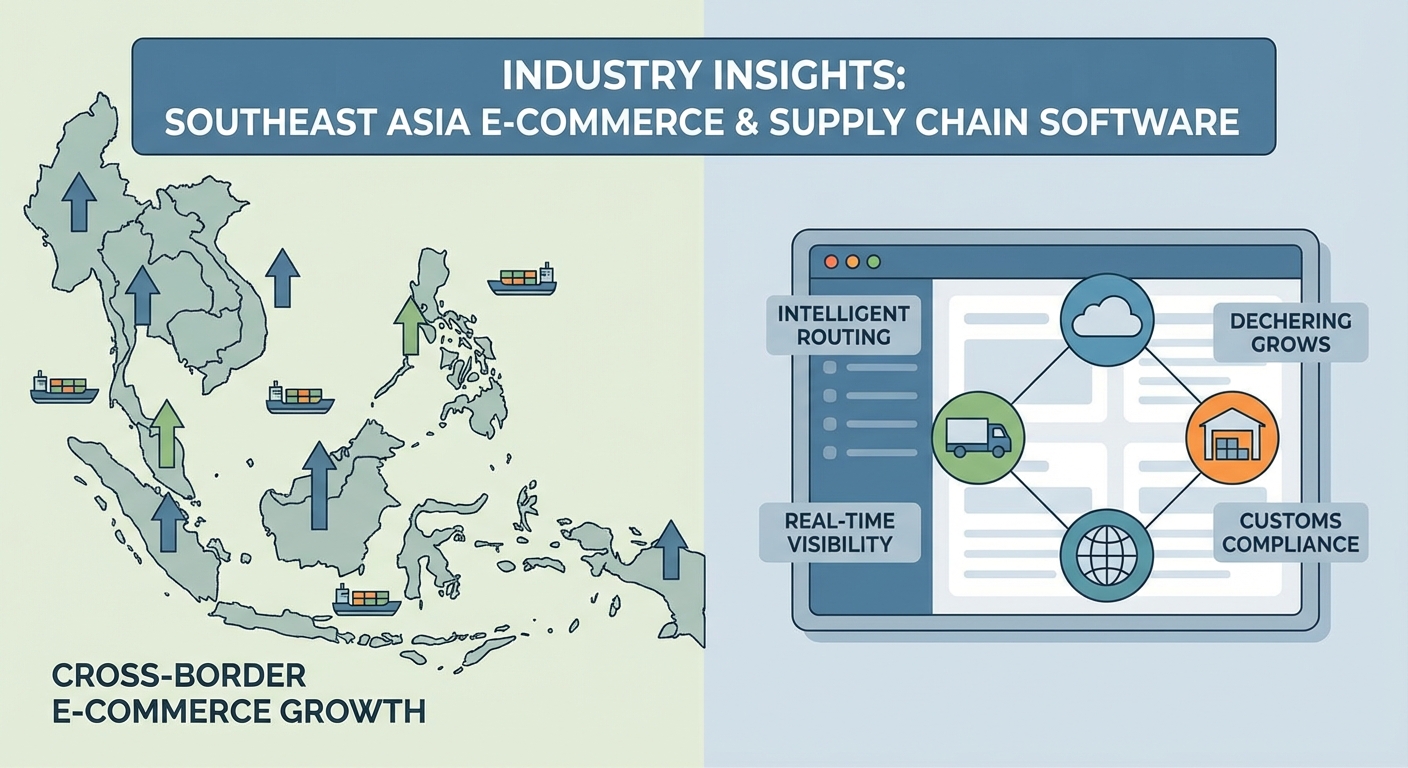
No single system does everything perfectly. Most successful operations use integrated tools rather than trying to force one platform to handle every function.
Here’s how the pieces typically fit together:
| System Layer | Function | Integration Points |
|---|---|---|
| ERP Core | Financial management, procurement | Inventory, accounting, purchasing |
| Warehouse Management | Stock control, picking, packing | ERP, shipping carriers |
| Order Management | Order processing, routing | ERP, WMS, customer platforms |
| Shipping Platform | Label generation, tracking | Carriers, order management |
| Customs Software | Documentation, compliance | ERP, shipping platform |
The connections between systems matter as much as the systems themselves. Poor integration creates data gaps and manual workarounds.
Many Singapore companies find that connecting your business systems seamlessly requires careful planning around data flows and API capabilities.
Practical steps to upgrade your cross-border capabilities
Moving from a legacy system to modern cross-border infrastructure takes planning. Here’s a realistic sequence:
-
Audit your current process flows. Document every step from order receipt to delivery confirmation. Note where manual intervention happens and why.
-
Map your data requirements. List every data point you need to process an order, clear customs, and fulfil delivery. Identify gaps in your current systems.
-
Prioritise by pain points. Rank issues by business impact. Customs delays that cost you customers rank higher than reporting inconveniences.
-
Build your selection criteria. Define must-have features versus nice-to-have capabilities. Be specific about regional requirements.
-
Test with pilot markets. Start with one or two countries before rolling out region-wide. Learn from mistakes when the stakes are lower.
-
Plan for data migration. Moving product catalogues, customer records, and transaction history takes longer than most people expect.
Understanding what enterprise software really costs over 5 years helps you build realistic budgets that account for implementation, training, and ongoing support.
Common implementation pitfalls to avoid
Companies make predictable mistakes when upgrading supply chain systems for cross-border operations.
Underestimating data cleanup time. Your new system is only as good as the data you feed it. Product classifications, customer addresses, and SKU hierarchies need standardisation before migration.
Ignoring change management. Your warehouse staff, customer service team, and finance department all need training. New systems change daily workflows, and people resist change without proper preparation.
The experience of companies that have managed resistance through proven change management strategies shows that early involvement and clear communication prevent most adoption problems.
Choosing based on features rather than fit. A system with 500 features you’ll never use isn’t better than one with 50 features you’ll use daily. Focus on your specific cross-border requirements.
Skipping the integration assessment. Your new supply chain system needs to talk to your accounting software, your e-commerce platforms, and your carrier systems. Verify integration capabilities before committing.
Regional infrastructure considerations
Southeast Asia’s logistics infrastructure varies dramatically by country. Your software needs to account for these realities.
Singapore offers world-class ports and efficient customs clearance. Most shipments clear in hours. Indonesia’s customs can take days or weeks depending on the port and product category. Your system should set customer expectations based on actual performance data, not wishful thinking.
Warehouse location strategy matters more in cross-border operations than domestic ones. A single warehouse in Singapore works well for high-value, low-weight products. Bulky or heavy items need distributed inventory closer to major customer concentrations.
Consider these distribution approaches:
- Hub and spoke: Central warehouse in Singapore with smaller facilities in Jakarta, Manila, Bangkok
- Market-specific: Dedicated inventory in each major market based on local demand patterns
- Hybrid: Fast-moving items distributed regionally, slow movers centralised
Your software should support whichever model fits your product mix and customer distribution.
Payment and settlement complexity
Cross-border e-commerce creates payment complexity that domestic operations never face.
Customers pay in local currency. You might receive settlement in Singapore dollars, US dollars, or the local currency depending on your payment processor. Exchange rates fluctuate between transaction and settlement.
Your system needs to:
- Record the original transaction amount and currency
- Track the exchange rate at transaction time
- Reconcile actual settlement amounts
- Handle payment processor fees that vary by country
- Manage refunds in the original transaction currency
Many e-commerce platforms handle the customer-facing payment but leave you to reconcile the backend accounting manually. Good supply chain software bridges this gap.
Measuring what matters
You can’t improve what you don’t measure. Cross-border operations require specific metrics beyond standard supply chain KPIs.
Track these indicators:
- Customs clearance time by country and product category. Identifies bottlenecks and helps you set realistic delivery promises.
- Carrier performance by route. Shows which shipping partners deliver reliably on specific lanes.
- Inventory turnover by location. Reveals whether your distributed inventory strategy is working or creating dead stock.
- Perfect order rate. Measures orders delivered complete, on time, and damage-free. More important in cross-border where recovery from mistakes costs more.
- Landed cost accuracy. Compares estimated total costs (product + shipping + duties + taxes) against actual costs.
Companies that focus on measuring process automation success through relevant KPIs typically see faster ROI from their technology investments.
The role of cloud versus on-premise systems
Most modern supply chain software for cross-border operations runs in the cloud. There are good reasons for this.
Cloud systems update automatically. When Thailand changes its import documentation requirements, your software provider pushes the update to all users. On-premise systems require manual updates that often get delayed.
Cloud platforms scale more easily. Your December peak season might process five times the orders of a typical February. Cloud infrastructure handles this elasticity better than fixed on-premise capacity.
However, some companies prefer on-premise for data sovereignty or integration with existing systems. The choice depends on your specific situation, but the trend strongly favours cloud for cross-border operations.
If you’re weighing options, understanding which solution fits your Singapore business requires looking at your integration needs, IT capabilities, and growth plans.
Future-proofing your investment
The Southeast Asian e-commerce market will look different in three years. Your software choices should anticipate likely changes.
Expect continued growth in social commerce. Platforms like TikTok Shop and Instagram Shopping are becoming transaction channels, not just marketing tools. Your systems need flexibility to integrate with emerging sales channels.
Sustainability reporting will become mandatory. Customers and regulators increasingly demand carbon footprint data for shipments. Choose systems that can track and report environmental metrics.
Artificial intelligence will automate more decisions. Demand forecasting, inventory allocation, and carrier selection are already moving towards AI-driven optimisation. Your platform should support these capabilities or integrate with tools that do.
What this means for your next steps
Southeast Asia’s cross-border e-commerce growth isn’t slowing down. The companies that thrive will be those that modernise their supply chain technology to match market demands.
Start by assessing your current capabilities against the requirements outlined here. Identify the biggest gaps between what you have and what you need. Build a realistic timeline for improvement that balances urgency with proper implementation.
Your supply chain software should enable growth, not constrain it. As order volumes increase and you expand into new markets, your systems should scale smoothly without constant workarounds and manual processes. That’s the difference between sustainable growth and operational chaos.