
The Personal Data Protection Act amendments are reshaping how Singapore businesses handle data. If you’re managing an ERP system, these changes affect everything from vendor contracts to breach protocols. The rollout happens in three phases between January and June 2025, and each phase brings new compliance requirements that touch your enterprise software stack.
The Singapore PDPA amendments 2024 introduce mandatory data breach notifications, data protection officer appointments, and stricter processor obligations across three implementation phases. Businesses using ERP systems must update security protocols, review vendor agreements, and prepare for enhanced penalties. Companies processing data for over 20,000 individuals or handling sensitive financial data for 10,000 plus users need designated DPOs by June 2025.
Three Implementation Phases That Change Your Compliance Timeline
The amendments don’t arrive all at once. Parliament structured the rollout to give businesses time to adapt.
Phase one started on 1 January 2025. These changes are mostly administrative. The terminology shifts from “data user” to “data controller.” Biometric data now falls under sensitive personal data. Personal data of deceased individuals no longer sits within PDPA scope.
Phase two kicks in on 1 April 2025. This phase brings real teeth. Maximum penalties jump significantly for non-compliance. Data processors face direct regulation under security principles. Cross-border transfers get clearer rules, allowing movement to countries with substantially similar protection standards.
Phase three arrives on 1 June 2025. This is where operational changes hit hardest. Mandatory breach notifications become law. Data portability rights give customers control. DPO appointments become compulsory for qualifying organisations.
Your ERP timeline needs to account for all three phases. Waiting until June means scrambling to meet multiple requirements simultaneously.
Why Your ERP Vendor Agreements Need Immediate Review
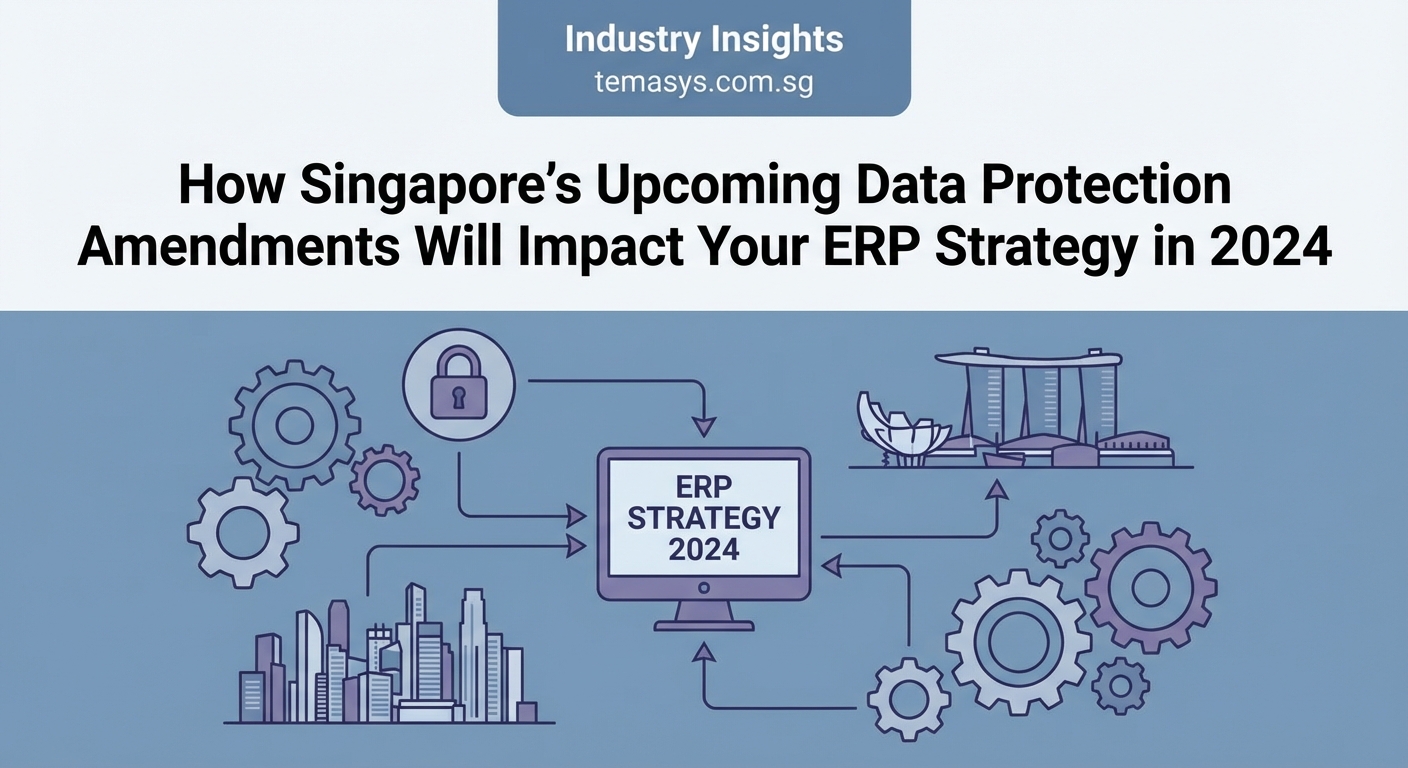
Data processors now carry direct obligations under the security principle. This fundamentally changes your relationship with ERP vendors.
Previously, responsibility sat primarily with data controllers. Your organisation bore the compliance burden. Vendors operated in a grey zone. The amendments eliminate that ambiguity.
Every third party processing data through your ERP system now answers directly to PDPA requirements. This includes:
- Cloud hosting providers storing your business data
- Integration partners moving data between systems
- Analytics vendors processing customer information
- Backup service providers maintaining copies
- Support teams accessing systems for troubleshooting
Review every contract. Look for clauses addressing security obligations. Check whether vendors commit to PDPA compliance standards. Verify they maintain appropriate safeguards.
Most standard vendor agreements written before 2024 won’t cut it. The legal landscape shifted. Your contracts need updating to reflect processor obligations.
“Organisations often overlook the cascade effect. When your processor fails to meet security standards, you still face penalties as the data controller. The amendments make processor compliance your problem too.” – Data Protection Counsel, Singapore Law Practice
Mandatory DPO Requirements That Catch Most Businesses Off Guard
The June 2025 deadline for data protection officer appointments applies more broadly than many executives realise.
You need a DPO if you process personal data for more than 20,000 data subjects. Count employees, customers, suppliers, and any other individuals in your systems. Most mid-sized companies hit this threshold.
You also need a DPO if you handle sensitive financial data for over 10,000 individuals. This catches financial services firms, payment processors, and retailers with loyalty programmes.
The third trigger is regular and systematic monitoring. If your ERP tracks user behaviour, monitors employee productivity, or analyses customer patterns, you likely qualify.
The DPO can be part-time. You can outsource the function. You can appoint from existing staff. But you must have someone designated and properly trained.
Here’s what catches people out. The DPO needs genuine authority. They must report to senior management. They require access to all data processing activities. They need resources to perform audits and investigations.
Appointing your IT manager as a tick-box exercise doesn’t meet the standard. The Personal Data Protection Commission expects DPOs to function as independent compliance officers.
Breach Notification Protocols Your ERP Team Must Implement Now
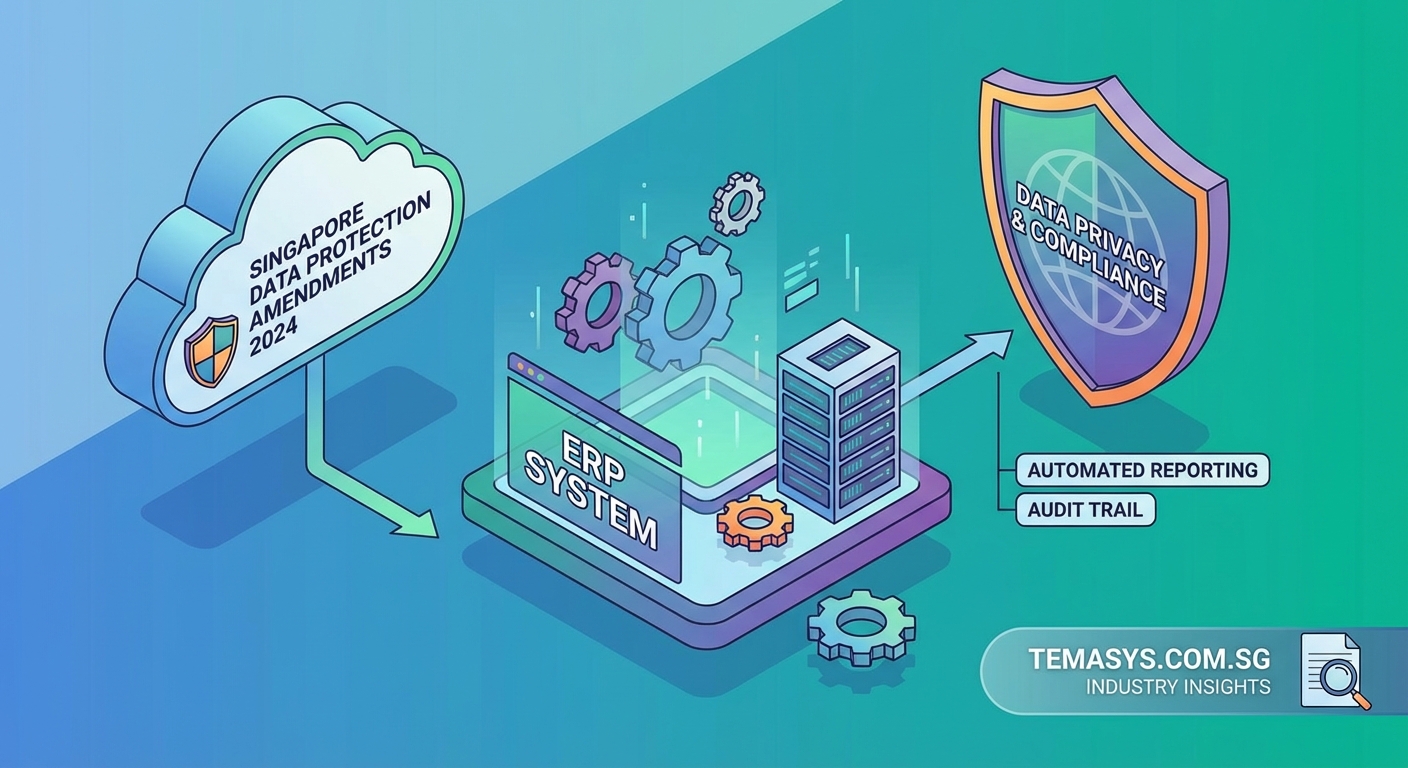
From June 2025, data breaches trigger mandatory notifications. The requirements split into two categories.
All breaches go to the Personal Data Protection Commission. No exceptions. You must notify the PDPC when you discover unauthorised access, loss, or misuse of personal data.
Breaches likely to cause significant harm require customer notification too. Significant harm means identity theft risk, financial loss, reputational damage, or physical safety concerns.
Your ERP systems need built-in breach detection and response protocols. Waiting to design these processes after a breach occurs guarantees non-compliance.
Building a Breach Response Framework
- Deploy monitoring tools that flag unusual data access patterns across your ERP modules
- Create escalation procedures that route suspected breaches to your DPO within hours
- Document assessment criteria for determining harm significance
- Draft notification templates for both PDPC and affected individuals
- Establish communication protocols that prevent premature disclosure before investigation completes
- Train response teams on evidence preservation requirements for potential investigations
The notification timeline matters. The PDPC expects prompt reporting. “Prompt” typically means within 72 hours of discovery. Delayed notification compounds penalties.
Your ERP integration approach affects breach risk. More integration points create more potential vulnerabilities. Each connection needs security assessment.
Data Portability Rights That Transform Customer Data Management
June 2025 introduces data portability rights. Customers can request their personal data in a format that allows transfer to another controller.
This sounds simple. The implementation challenges are substantial.
Your ERP must be able to extract individual customer records completely. Not just contact details. Everything. Purchase history, preferences, interactions, notes, customisations. The whole relationship.
The data needs to be machine-readable. PDF printouts don’t satisfy the requirement. You need structured formats like CSV, JSON, or XML.
Technical feasibility provides an out. If your systems genuinely cannot export data in compatible formats, you can refuse. But “we haven’t built that feature yet” doesn’t qualify as technical infeasibility.
Compatibility matters too. You don’t have to convert data to match every possible receiving system. But you must use commonly accepted formats that other controllers can reasonably import.
| ERP Capability | Compliance Status | Action Required |
|---|---|---|
| Export individual customer records | Essential | Build extraction functions per module |
| Structured data format output | Mandatory | Implement JSON or CSV export options |
| Complete data set inclusion | Required | Map all personal data fields across system |
| Automated request processing | Recommended | Create self-service portal for requests |
| Audit trail of portability requests | Best practice | Log all extractions with timestamps |
| Data validation before transfer | Critical | Verify accuracy and completeness |
Consider the operational impact. A competitor could make portability requests easy. Customers might switch just to see what data you hold. Your switching costs just dropped.
Smart businesses turn this into advantage. Make your own portability process seamless. Show customers you respect their data ownership. Build trust that reduces churn.
Increased Penalties That Make Compliance a Board-Level Priority
The April 2025 amendments substantially increase maximum penalties. The specifics matter less than the magnitude. Fines jumped enough to threaten business viability for serious breaches.
The PDPC historically took an education-first approach. Early PDPA enforcement focused on guidance and warnings. That era is ending.
Singapore positions itself as a trusted data hub. International adequacy assessments depend on robust enforcement. The PDPC faces pressure to demonstrate teeth.
Your board needs to understand the financial exposure. A major breach with aggravating factors could generate penalties exceeding the cost of proper compliance by orders of magnitude.
Aggravating factors include:
- Previous violations or warnings
- Deliberate or reckless behaviour
- Delayed breach notification
- Large numbers of affected individuals
- Sensitive data involved
- Failure to cooperate with investigations
The reputational damage often exceeds direct penalties. Customers notice breach disclosures. Partners question your data handling. Regulators scrutinise other compliance areas.
Building a business case for digital transformation now includes compliance risk mitigation. The cost of modern, compliant systems compares favourably to breach exposure.
Cross-Border Data Transfers Under the New Framework
The amendments clarify cross-border transfer rules. You can now transfer personal data to countries with substantially similar protection laws or equivalent protection levels.
This matters enormously for cloud ERP deployments. Many vendors host data across multiple regions. The old framework created uncertainty about which transfers required individual consent.
The new approach aligns with international standards. Countries with adequacy agreements get automatic approval. Others require assessment of protection equivalence.
For ERP planning, this means:
- Verify where your vendor stores and processes data
- Check whether those jurisdictions meet PDPA standards
- Document your assessment of protection equivalence
- Include transfer mechanisms in vendor contracts
- Review data residency options if hosting occurs in uncertain jurisdictions
The cloud versus on-premise decision now includes cross-border transfer considerations. On-premise systems give complete control over data location. Cloud systems offer flexibility but require careful vendor evaluation.
Singapore-based hosting becomes more attractive. Keeping data within jurisdiction eliminates transfer complexity. But it shouldn’t be the only factor. Security, reliability, and business continuity matter too.
Sensitive Data Handling in Modern ERP Systems
The expanded definition of sensitive personal data now explicitly includes biometric data. This catches more businesses than expected.
Biometric authentication is everywhere. Fingerprint scanners for system access. Facial recognition for time tracking. Voice authentication for phone systems. All of these now trigger enhanced protection requirements.
Your ERP might collect biometric data without you realising it. Modern attendance modules often include fingerprint or facial recognition. Access control integrations might pass biometric data through your system.
Sensitive data attracts stricter standards. You need explicit consent for collection. You must implement enhanced security measures. Breach notification thresholds drop lower. Penalties for mishandling increase.
Audit your ERP modules for biometric data collection. Check integrations with access control, attendance, and authentication systems. Document the business necessity for each biometric use case.
Consider alternatives. Do you really need fingerprint authentication? Would secure passwords and two-factor authentication suffice? Reducing sensitive data collection reduces compliance burden.
Financial data also qualifies as sensitive. If you process financial information for over 10,000 individuals, you need a DPO. This catches:
- Retailers with stored payment methods
- Subscription businesses with recurring billing
- Employers processing payroll for large workforces
- Financial services firms managing client accounts
- Platforms facilitating transactions between users
Count carefully. The 10,000 threshold includes current and historical records. Archived data still counts if you maintain it in accessible systems.
Practical Steps for ERP Compliance Before June 2025
You have limited time to prepare. Prioritise actions that address multiple requirements simultaneously.
Start with a data audit. Map where personal data lives in your ERP. Identify which modules process sensitive information. Document data flows between systems. Count data subjects to determine DPO requirements.
Review vendor relationships next. List every third party with data access. Assess their security practices. Update contracts to reflect processor obligations. Verify they commit to PDPA compliance.
Implement breach detection capabilities. Deploy monitoring tools across ERP modules. Create alert systems for unusual access patterns. Establish investigation protocols. Draft notification templates.
Designate or hire a DPO if you meet the thresholds. Give them proper authority and resources. Ensure they can access all systems and data processing activities. Budget for training and tools.
Build data portability functions. Design extraction processes for customer records. Implement structured data exports. Create request handling workflows. Test the complete process with sample data.
Update security practices. Review access controls across your ERP. Implement encryption for sensitive data at rest and in transit. Strengthen authentication requirements. Schedule regular security audits.
Preparing your organisation for ERP implementation success now includes PDPA compliance from day one. New implementations should build in required features rather than retrofitting later.
Common Compliance Mistakes That Create Unnecessary Risk
Businesses make predictable errors when adapting to new regulations. Avoid these patterns.
Treating compliance as an IT problem alone fails. PDPA compliance requires legal, operational, and technical coordination. Your IT team can implement controls. But they need guidance on requirements and priorities.
Waiting until deadline approaches guarantees poor outcomes. The June 2025 requirements need months of preparation. Breach notification protocols require testing. Data portability functions need development. DPO recruitment and training takes time.
Copying competitor approaches without understanding your specific situation creates gaps. Your data processing activities differ from other businesses. Your ERP configuration is unique. Your vendor relationships vary. Cookie-cutter compliance doesn’t work.
Neglecting employee training undermines technical controls. Staff need to understand breach recognition. They must know escalation procedures. They should grasp data handling requirements. The best systems fail if people misuse them.
Assuming existing security measures suffice misses the point. The amendments introduce new obligations beyond general security. Breach notification isn’t just about prevention. Data portability isn’t a security feature. Processor obligations extend beyond your perimeter.
Ignoring the cascade to subsidiaries and related entities creates exposure. If your corporate group includes multiple legal entities, each needs compliance assessment. Shared ERP systems complicate responsibility allocation.
How Modern ERP Architecture Supports Compliance
System architecture choices made years ago now affect compliance capability. Modern ERP platforms handle PDPA requirements more easily than legacy systems.
Cloud-native systems typically include better audit logging. Every data access gets recorded automatically. User actions are traceable. Changes are versioned. This supports breach investigation and regulatory inquiries.
Modular architectures allow targeted security controls. You can implement stricter access rules for sensitive data modules. You can isolate financial information from general business data. You can create compliance-specific workflows.
API-driven integrations provide visibility into data movement. You can monitor which systems access data. You can log transfer events. You can implement approval workflows for sensitive transfers.
Modern platforms often include built-in data export functions. Customer portals can offer self-service data downloads. Structured exports are standard features. Compliance becomes easier when the platform supports required capabilities natively.
Choosing between different ERP approaches now includes compliance capability assessment. Ask vendors how their systems support PDPA requirements. Request demonstrations of breach detection, data portability, and audit logging.
Legacy systems aren’t automatically disqualified. But they require more customisation to meet new standards. Factor compliance enhancement costs into your total cost of ownership calculations.
The Intersection of PDPA Amendments and Digital Transformation
These regulatory changes accelerate existing digital transformation pressures. Businesses already considering ERP upgrades now have compliance deadlines forcing decisions.
This creates opportunity. Rather than treating PDPA compliance as a cost centre, frame it as transformation catalyst. Modern systems that meet compliance requirements also improve operational efficiency.
Better data governance supports business intelligence. Clearer data ownership enables analytics. Improved security reduces overall risk. Enhanced audit capabilities support process improvement.
The compliance investment pays dividends beyond regulatory adherence. You build systems that scale. You create processes that adapt. You establish governance that supports growth.
Digital transformation failures often stem from lack of clear drivers. Compliance provides concrete requirements and firm deadlines. Use this clarity to drive broader improvements.
Budget conversations change when compliance is mandatory. CFOs who resist transformation spending can’t ignore regulatory requirements. The question shifts from “should we invest” to “how do we invest wisely.”
Link PDPA compliance work to strategic initiatives. If you’re already planning ERP upgrades, incorporate compliance requirements. If you’re considering cloud migration, include data protection capabilities. If you’re implementing automation, build in proper controls.
Vendor Selection Criteria in the Post-Amendment Landscape
Choosing ERP vendors now requires compliance due diligence. Don’t assume all vendors meet PDPA standards.
Ask specific questions about data handling:
- Where is data physically stored and processed?
- What security certifications does the vendor hold?
- How does the platform support breach detection and notification?
- What data portability features are included?
- How are processor obligations documented in contracts?
- What audit rights do customers have?
- How does the vendor handle cross-border transfers?
Request compliance documentation. Vendors serving Singapore should already have PDPA compliance programmes. Ask to see their policies, procedures, and certifications.
Check references specifically about compliance support. Contact existing customers. Ask about their experience with data protection requirements. Learn whether the vendor actively helps with compliance or creates obstacles.
Evaluate the vendor’s track record. Have they experienced breaches? How did they handle notification and remediation? Past behaviour predicts future performance.
Consider the vendor’s commitment to Singapore. Local presence matters for compliance support. Vendors with Singapore operations better understand PDPA requirements. They’re more likely to update systems proactively as regulations evolve.
Vendor selection red flags now include compliance evasiveness. If a vendor can’t clearly explain how their system supports PDPA requirements, keep looking.
Making PDPA Compliance a Competitive Advantage
Most businesses view regulatory compliance as burden. Smart companies turn it into differentiation.
Customers increasingly care about data protection. Privacy concerns influence purchasing decisions. Demonstrating robust data handling builds trust.
Make your compliance efforts visible. Publish your privacy policies clearly. Explain your security measures. Highlight your DPO appointment. Show customers you take their data seriously.
Use data portability as a trust signal. Make it easy for customers to access their data. Don’t hide behind technical complexity. Demonstrate confidence in your service by reducing switching friction.
Position breach preparedness as reliability indicator. Businesses that plan for incidents inspire more confidence than those pretending breaches never happen. Your preparation shows professionalism.
Train customer-facing staff on data protection. When customers ask about privacy, your team should provide confident, accurate answers. Knowledge builds trust.
Consider compliance certification. Various frameworks assess PDPA compliance. Certification demonstrates commitment beyond minimum requirements.
Your competitors face the same compliance requirements. Most will do the minimum. Exceeding standards creates differentiation opportunity.
What Success Looks Like Six Months After Full Implementation
By December 2025, compliant organisations will have settled into new routines. The transition period will be over. These capabilities should be business as usual:
Your DPO conducts regular audits without drama. They identify issues early. They recommend improvements proactively. Compliance becomes continuous process rather than crisis response.
Breach detection systems run quietly in the background. Alerts trigger immediate investigation. Response teams know their roles. Notification templates are ready if needed. The machinery exists even if never used.
Data portability requests get handled smoothly. Customers receive their data within days. The format is clean and complete. The process requires minimal manual intervention.
Vendor relationships include clear compliance terms. Processors understand their obligations. Regular compliance reviews happen on schedule. Issues get addressed before they become problems.
Cross-border data flows occur within documented frameworks. You know where data goes. You’ve assessed protection equivalence. Transfer mechanisms are contractually sound.
Your ERP systems support compliance natively. Security controls are configured properly. Audit logging captures necessary information. Data classification is clear. Access controls reflect sensitivity levels.
Staff understand their data protection responsibilities. They recognise potential breaches. They follow handling procedures. They escalate appropriately. Culture supports compliance.
This isn’t aspirational. This is achievable with proper planning and execution. The businesses that start now will reach this state. Those that delay will struggle.
Building Compliance Into Your ERP Strategy From the Start
The Singapore PDPA amendments 2024 fundamentally change enterprise data management. The three-phase rollout through June 2025 gives you time to adapt, but not unlimited time.
Your ERP systems sit at the centre of data processing. They touch customer information, employee records, supplier data, and financial details. Making these systems compliant isn’t optional.
Start with assessment. Understand which requirements apply to your organisation. Count your data subjects. Evaluate your sensitive data processing. Review your vendor relationships.
Then prioritise. June deadlines come first. DPO appointments and breach notification protocols need immediate attention. Data portability can follow slightly behind.
Involve the right people. IT implements controls, but legal defines requirements. Operations manages processes. Finance approves budgets. Compliance needs cross-functional coordination.
Think beyond minimum compliance. Build systems that adapt as regulations evolve. Create processes that scale as your business grows. Establish governance that supports long-term success.
The businesses that thrive will be those that view PDPA compliance as foundation for trusted customer relationships rather than regulatory burden to minimise.
Leave a Reply