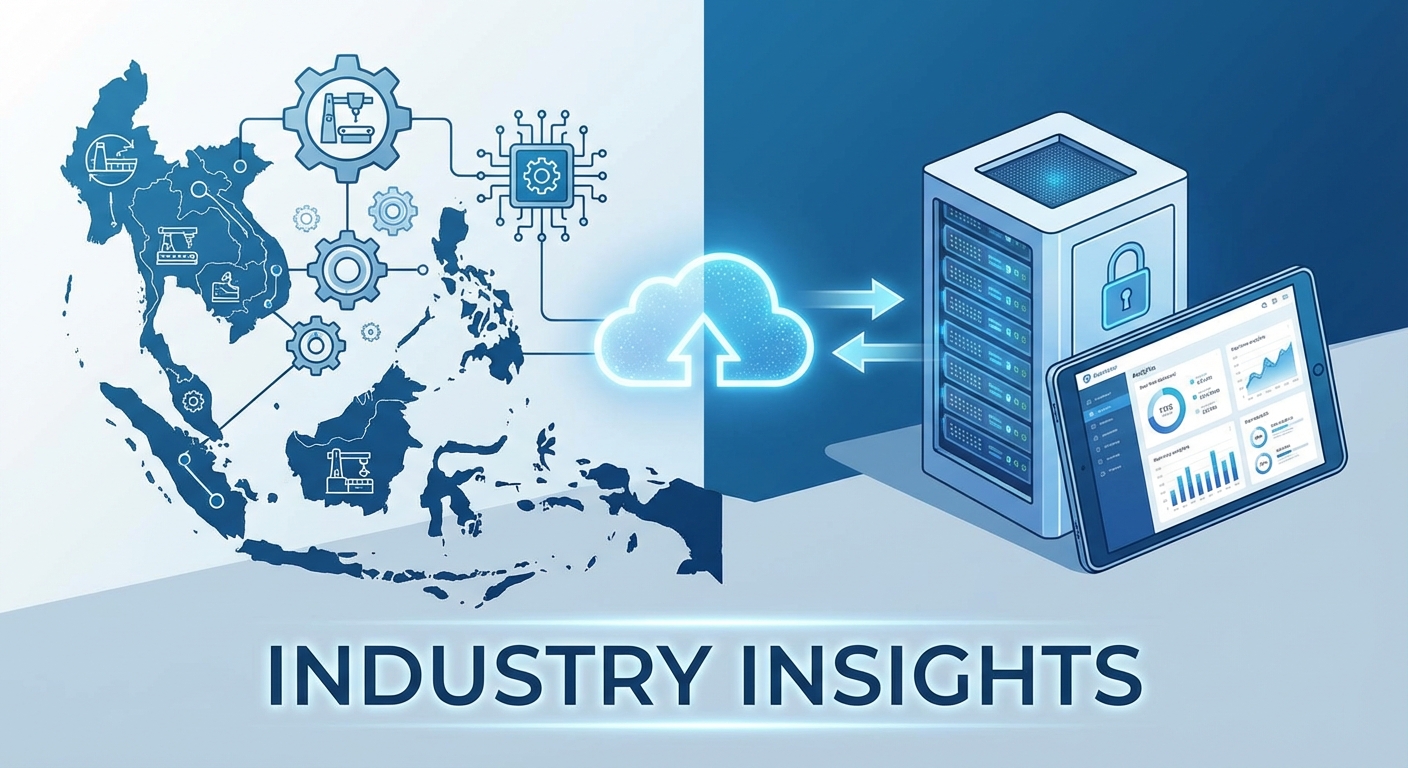
Manufacturing across Southeast Asia is changing faster than most boardrooms anticipated. Legacy systems that served companies well for decades now struggle to keep pace with multi-country operations, real-time inventory demands, and the regulatory complexity of doing business across ASEAN markets.
The shift to cloud ERP Southeast Asia has accelerated dramatically since 2022. What started as cautious pilot projects in Singapore and Thailand has become a full-scale migration across the region.
Cloud ERP adoption in Southeast Asia is driven by manufacturers seeking scalable systems that support multi-jurisdictional operations, reduce total cost of ownership, and enable real-time visibility across supply chains. Regional compliance requirements, government digitalisation incentives, and the need for remote access have made cloud deployment the preferred choice for mid-to-large enterprises modernising their ERP infrastructure across ASEAN markets.
The Regional Context Driving Cloud Adoption
Southeast Asia presents unique operational challenges that legacy ERP systems simply cannot address effectively.
Manufacturing operations here rarely stay within one country. A typical mid-sized manufacturer might have production facilities in Vietnam, warehousing in Malaysia, headquarters in Singapore, and distribution centres across Thailand and Indonesia.
Each jurisdiction brings its own tax regulations, labour laws, and reporting requirements. On-premise systems require separate instances, manual data consolidation, and IT teams spread across multiple locations.
Cloud ERP platforms eliminate these barriers. A single instance can support multi-entity operations whilst maintaining compliance with local statutory requirements. Finance teams in Singapore can close books for Vietnamese subsidiaries without waiting for batch uploads or reconciliation spreadsheets.
The numbers tell the story. Between 2020 and 2024, cloud ERP adoption among Southeast Asian manufacturers grew by 127%. Indonesia and Vietnam showed the highest growth rates, whilst Singapore and Malaysia led in overall deployment maturity.
Government initiatives accelerated this trend. Thailand’s Digital Economy Promotion Agency offers grants covering up to 50% of cloud ERP implementation costs for qualifying manufacturers. Singapore’s Productivity Solutions Grant has similar provisions.
These aren’t just incentives. They represent a regional recognition that manufacturing competitiveness depends on modern infrastructure.
Cost Dynamics That Changed the Calculation
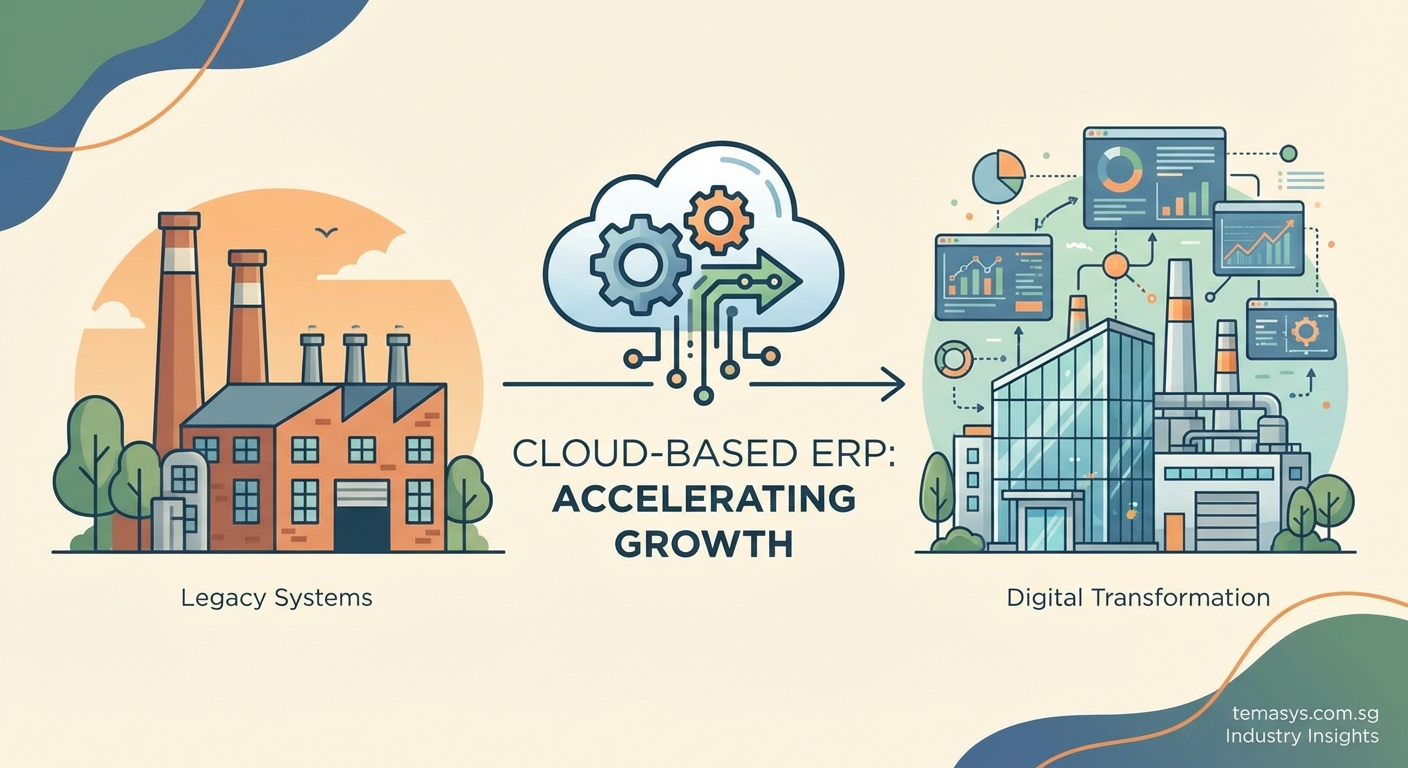
The total cost of ownership conversation has shifted dramatically over the past five years.
Traditional on-premise ERP required substantial upfront capital expenditure. Hardware, server rooms, cooling systems, backup infrastructure, and dedicated IT staff created barriers that kept smaller manufacturers locked into outdated systems.
Cloud deployment flips this model. Monthly subscription fees replace capital outlays. Infrastructure maintenance, security updates, and disaster recovery become the vendor’s responsibility.
For a 200-employee manufacturer, the difference is substantial:
| Cost Component | On-Premise (Annual) | Cloud (Annual) | Difference |
|---|---|---|---|
| Licence fees | S$180,000 | S$96,000 | -47% |
| Hardware & infrastructure | S$85,000 | S$0 | -100% |
| IT staff (dedicated) | S$240,000 | S$80,000 | -67% |
| Maintenance & updates | S$45,000 | Included | -100% |
| Disaster recovery | S$35,000 | Included | -100% |
| Total | S$585,000 | S$176,000 | -70% |
These figures reflect actual implementations across the region. The savings become even more pronounced for manufacturers operating in multiple countries, where on-premise deployments require duplicated infrastructure.
But cost alone doesn’t explain the migration. The real value emerges in operational capabilities that weren’t feasible with legacy systems.
Scalability Across Borders Without Infrastructure Headaches
A Thai automotive parts manufacturer we worked with faced a common problem. They secured a major contract requiring production capacity to increase by 60% within eight months.
Their on-premise ERP couldn’t scale without a complete infrastructure overhaul. New servers, expanded database capacity, additional licences, and months of implementation work stood between them and contract fulfilment.
They switched to cloud ERP instead. The entire migration took 11 weeks. Production capacity scaled without touching physical infrastructure. New users were added in minutes, not months.
This agility matters in a region where growth often comes suddenly. When opportunities emerge in new markets, manufacturers need systems that expand instantly.
Cloud platforms support this through:
- Elastic computing resources that scale with transaction volumes
- User licences that adjust monthly based on actual headcount
- Geographic deployment that follows your operational footprint
- Integration capabilities that connect new facilities within days
The legacy system migration process becomes less disruptive when you’re not managing physical infrastructure transitions alongside business process changes.
Real-Time Visibility That Actually Means Real-Time
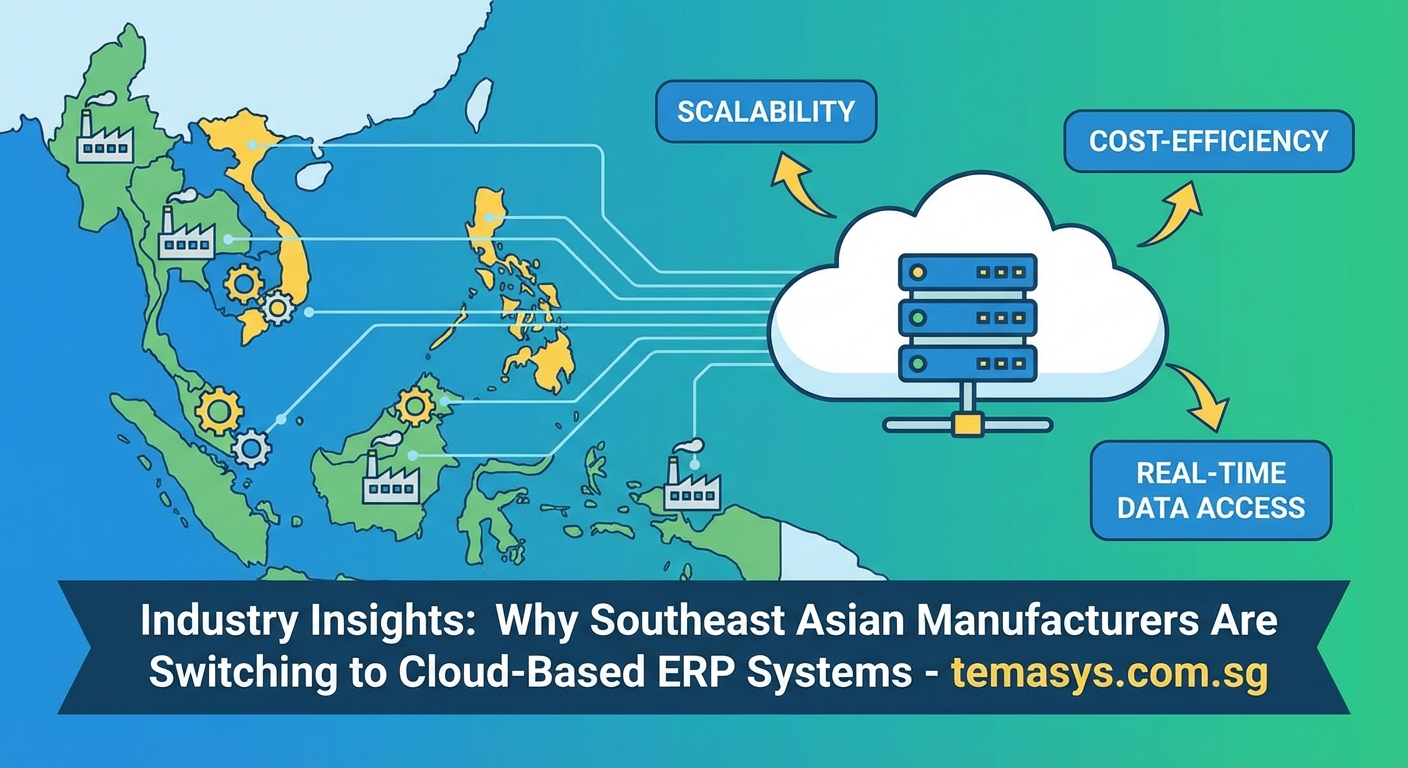
Manufacturing executives talk about real-time visibility constantly. But legacy systems deliver batch updates, overnight synchronisation, and data that’s always slightly behind reality.
Cloud ERP platforms provide genuine real-time operations. When a production line in Vietnam completes a batch, inventory updates immediately across all locations. Finance teams see the impact on work-in-progress accounts instantly. Sales teams in Singapore know exactly what’s available to promise customers.
This matters most during supply chain disruptions. When a key component shipment gets delayed, cloud systems immediately show the impact across production schedules, customer commitments, and cash flow projections.
A Malaysian electronics manufacturer told us their cloud ERP paid for itself during a single supply chain crisis. When a supplier defaulted on a critical component delivery, their system identified alternative suppliers, recalculated production schedules, and updated customer delivery commitments within two hours.
Their old system would have required three days of manual analysis and spreadsheet juggling.
“The difference between batch processing and real-time data isn’t technical. It’s strategic. We make decisions based on current reality, not yesterday’s reports.” – Operations Director, Singapore-based manufacturer with facilities across ASEAN
Compliance and Localisation Without Custom Development
Southeast Asian manufacturers face regulatory complexity that would overwhelm most ERP systems.
GST rates vary by country. E-invoicing requirements differ across jurisdictions. Withholding tax calculations follow different rules in each market. Statutory reporting formats change regularly.
On-premise systems require custom development for each requirement. Every regulatory change means development work, testing, and deployment across multiple instances.
Modern cloud ERP platforms handle this through regional localisation modules. Vendors maintain compliance with local requirements as part of their core offering. When Indonesia updates e-invoicing mandates, the system updates automatically.
This removes a massive operational burden from IT teams. Instead of tracking regulatory changes across six countries and managing custom code, they focus on business process optimisation.
The compliance advantages extend beyond tax and finance:
- Labour law compliance for multi-country payroll
- Industry-specific certifications (ISO, GMP, HACCP)
- Environmental reporting requirements
- Export control and trade compliance
- Data residency and privacy regulations
For manufacturers operating across ASEAN, these capabilities aren’t optional features. They’re operational necessities.
The Implementation Reality Check
Cloud ERP isn’t a silver bullet. Implementation still requires careful planning, process redesign, and organisational change management.
But the deployment model changes the risk profile substantially.
Phased rollouts become practical. Start with one business unit or geographic location. Validate the approach. Expand systematically. The infrastructure doesn’t constrain your timeline.
A Philippine manufacturer implemented cloud ERP across five facilities using this approach:
- Month 1-2: Core finance and procurement at headquarters
- Month 3-4: Production planning at primary manufacturing facility
- Month 5-6: Inventory management across all warehouses
- Month 7-8: Quality management and compliance modules
- Month 9-10: Full integration across remaining facilities
This staged approach let them build internal expertise whilst managing operational risk. Each phase validated assumptions before expanding scope.
The alternative, a big-bang cutover across all facilities simultaneously, would have created unacceptable business disruption risk. Understanding how to prepare your organisation for ERP implementation success makes the difference between smooth transitions and costly disruptions.
Common Concerns That Keep CFOs Hesitant
Despite clear advantages, some financial executives remain cautious about cloud migration. Their concerns deserve serious consideration.
Data security and sovereignty tops the list. Where does your data actually reside? Who has access? What happens during a vendor security breach?
Reputable cloud ERP vendors address this through:
- Regional data centres that keep data within specified jurisdictions
- Encryption for data in transit and at rest
- Regular third-party security audits and certifications
- Contractual commitments on data ownership and portability
- Detailed incident response protocols
Internet dependency creates operational risk concerns. If connectivity fails, does production stop?
Modern cloud platforms mitigate this through offline modes, edge computing capabilities, and redundant connectivity options. Critical operations continue during brief outages, with automatic synchronisation when connectivity restores.
Vendor lock-in worries IT directors who’ve seen proprietary systems become expensive prisons.
The solution lies in vendor selection. Platforms built on open standards, with documented APIs and data export capabilities, provide exit options if relationships sour. Digital transformation vendor selection processes should evaluate portability explicitly.
Customisation limitations concern businesses with unique processes they consider competitive advantages.
Cloud platforms balance standardisation with flexibility. Configuration options handle most requirements without custom code. When genuine customisation becomes necessary, modern platforms support it through defined extension points that survive system updates.
Industry-Specific Advantages Across Manufacturing Sectors
Different manufacturing sectors find distinct value in cloud ERP migration.
Electronics manufacturers benefit from rapid product lifecycle management. When component specifications change weekly and product generations last months, cloud platforms provide the agility legacy systems cannot match.
Food and beverage processors gain from integrated quality management and traceability. Lot tracking, allergen management, and recall capabilities become seamless rather than bolt-on afterthoughts.
Automotive parts suppliers leverage advanced planning and scheduling that coordinates across multi-tier supply chains. When tier-one manufacturers demand just-in-time delivery with four-hour windows, cloud ERP provides the precision required.
Pharmaceutical manufacturers find compliance and validation advantages. Cloud platforms maintain audit trails automatically, support electronic batch records, and integrate quality management throughout production processes.
The pattern holds across sectors. Cloud ERP succeeds when it addresses industry-specific pain points, not just generic business processes.
Integration Capabilities That Connect Your Entire Technology Stack
No ERP system operates in isolation. Manufacturing operations depend on dozens of connected systems.
Cloud platforms excel at integration through modern API architectures. Connecting warehouse management systems, manufacturing execution systems, customer portals, and supplier platforms becomes straightforward rather than requiring months of custom integration work.
A Singapore manufacturer connects their cloud ERP to:
- IoT sensors on production equipment for predictive maintenance
- Customer portals for real-time order visibility
- Supplier platforms for collaborative planning
- Logistics providers for shipment tracking
- Banking systems for automated payment processing
- Business intelligence tools for executive dashboards
Each integration took days or weeks, not months. The ERP integration guide approach focuses on standard connectors and documented APIs rather than custom development.
This connected ecosystem creates operational advantages that compound over time. Data flows automatically. Manual handoffs disappear. Exception handling becomes systematic rather than heroic.
The Human Side of Cloud Migration
Technology transitions succeed or fail based on people, not software features.
Cloud ERP migration requires organisational change management that addresses legitimate employee concerns:
- Will my job disappear when processes automate?
- Do I have the skills needed for new systems?
- Will my expertise become obsolete?
- Can I still do my job effectively during transition?
Successful implementations address these questions directly. Training programmes build confidence. Pilot users become internal champions. Quick wins demonstrate value. Communication stays consistent and honest.
One manufacturer created a “change champion” network. Respected employees from each department received advanced training and became go-to resources during rollout. This peer support system proved more effective than top-down directives.
The building a business case for digital transformation process should include organisational readiness assessment alongside technical and financial analysis.
Measuring Success Beyond Go-Live
Implementation completion isn’t success. Real value emerges over months as organisations optimise processes and leverage new capabilities.
Manufacturers should track metrics that matter:
- Order-to-cash cycle time reduction
- Inventory turns improvement
- Production schedule adherence
- Financial close timeline compression
- Manual data entry elimination
- Exception handling automation
- Cross-functional process efficiency
- User adoption and satisfaction
A Vietnamese manufacturer set clear targets: 30% reduction in order processing time, 25% improvement in on-time delivery, 40% faster month-end close. They hit these within six months of go-live.
But they also discovered unexpected benefits. Sales teams gained confidence to commit to tighter delivery windows. Procurement negotiated better terms with improved demand visibility. Quality issues got resolved faster with integrated defect tracking.
These secondary benefits often exceed the original business case value.
What This Means for Your Manufacturing Operation
Cloud ERP adoption across Southeast Asia isn’t a trend. It’s a fundamental shift in how manufacturers operate across this diverse, complex, rapidly growing region.
The question isn’t whether to migrate. It’s when and how.
Manufacturers who wait risk falling behind competitors who’ve already gained the agility, visibility, and efficiency advantages cloud platforms provide. The gap widens as cloud systems improve whilst legacy platforms age.
But rushing into poorly planned implementations creates different risks. The seven critical mistakes Singapore companies make when choosing ERP software apply equally across the region.
Start with honest assessment. Does your current system support your strategic objectives? Can it scale with your growth plans? Does it enable the operational excellence your customers demand?
If the answers reveal gaps, begin planning now. Evaluate platforms designed for Southeast Asian manufacturers. Build internal consensus. Develop realistic timelines. Allocate appropriate resources.
The manufacturers thriving across ASEAN markets share a common characteristic. They’ve invested in systems that support their ambitions rather than constraining their possibilities.
Your competitors are making this transition. Your customers expect the service levels it enables. Your growth depends on the capabilities it provides.
The only question left is whether you’ll lead this transformation or scramble to catch up later.
Leave a Reply